The Evolution of High-End Home Cinema
For this piece, we had the opportunity to speak to Alexander Riemann of ARLED Cinema. They run a family-owned business in its second generation, and their team sets a new standard in home theater construction.
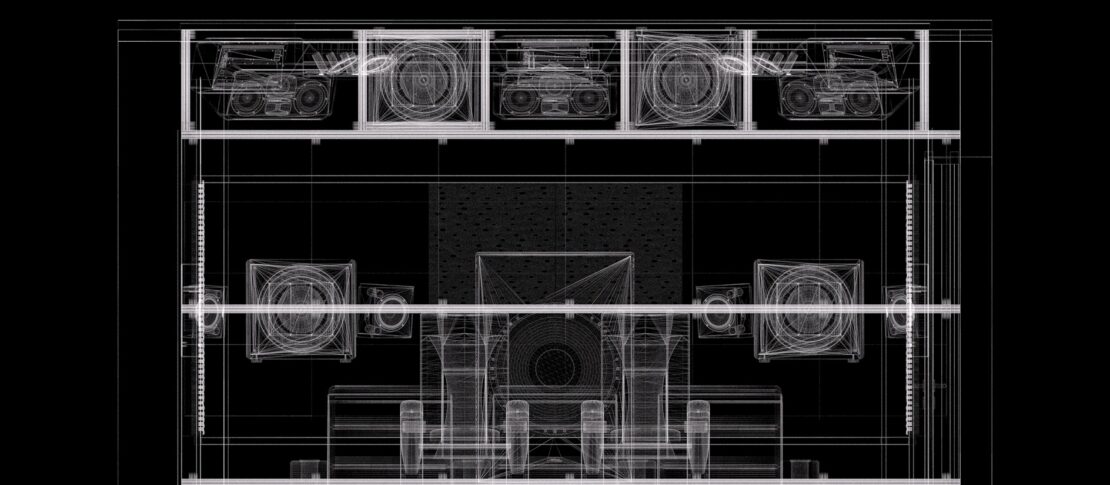
ARLED’s installations feature unique components and combinations in AV technology, breaking new ground for immersive home cinemas. Amongst the many tricks they have up their sleeves, they have chosen ADAM Audio studio monitors for several installations, such as the recently finished “Pitch Black” cinema in Berlin, Germany.
Hi Alexander! Let’s jump right in. What technical or design trends are you currently seeing in the home cinema sector?
“Clearly, LED screens are replacing classic projection onto a screen! Unlike traditional projection, LED walls work perfectly even in ambient light. This allows rooms to be designed brighter, which in turn enables new uses such as sports events, networking events, or karaoke – where darkness would actually be a disadvantage. Ambient light is no longer a problem but becomes a feature. Lighting design is actively used to create atmosphere. At ARLED, we decided to use our experience and expertise to develop our own LED screens, and after two years of intensive development work, we succeeded with the “SIRIUS Screens” and surpass the visual quality of projection systems.
A second trend is ‘multipurpose rooms,’ meaning spaces with multiple uses. The classic cinema auditorium, optimized for a single purpose, aka ‘watching movies in a dark room’, is increasingly being supplemented or even replaced by flexible room concepts. Today, rooms need to be more versatile to maximize both utilization and experience value. While a traditional cinema is often only used at certain times, multipurpose rooms can be used almost continuously, hosting a wide variety of formats for different target audiences. A key driver is the desire for more social experiences. Cinema used to be a rather quiet, individual consumption format. Today, many people are actively seeking shared experiences again. Formats such as karaoke nights, live sports broadcasts, or gaming events actively bring people together.
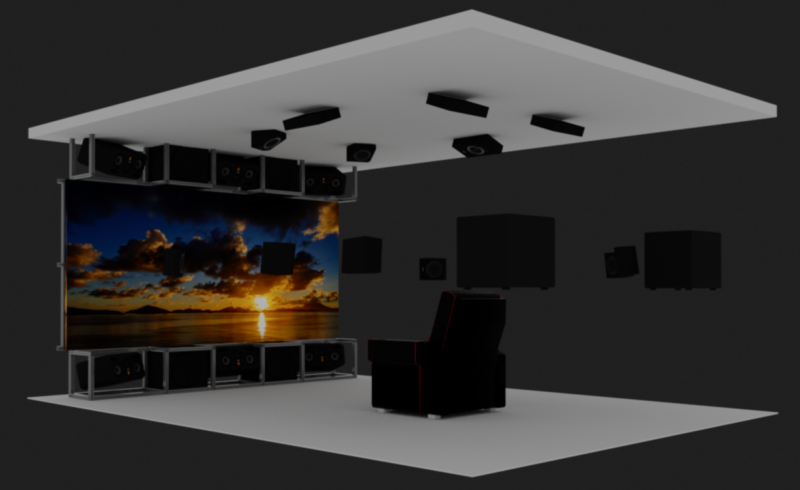
Another important factor is the rise of ‘immersive audio’ and ‘music experiences.’ High-quality multi-channel audio systems enable entirely new applications, from immersive concert formats to interactive sound installations. This expands the range far beyond traditional film. The integration of bar and lounge concepts also plays a major role.”
Which audio formats are most in demand?
“Primarily immersive audio formats such as Dolby Atmos or Sony’s 360° Audio, as well as ‘interactive audio.’ Traditional stereo installations still exist, of course.”
How do you plan an installation? Which decisions are made on the drawing board, and which during actual implementation?
“Everything is planned in detail in advance. We don’t encounter surprises on-site. We pre-measure the raw spaces using specialized 3D scanners that generate a so-called point cloud model. This model can be integrated into our planning tools, allowing us to design the space with millimeter precision. After planning, we recreate the room in virtual reality and review it together with the clients. In VR, you can even evaluate wall reflections of light, viewing angles, and gain a general understanding of the finished product – making adjustments before construction begins.
For planning, we follow generally accepted architectural standards. This even allows us to design our rooms within large construction projects that are planned as BIM models (Building Information Modeling). After completion of the planning phase, our clients receive a roughly 100-page document – the ‘Project Report.’ This comprehensive report includes all planning and calculations – from heat load, performance calculations, weight loads, power and signal routing plans, and more, all the way to system operation. Every step is explained in detail so that the client can understand all processes. The only decisions made on-site relate to fine-tuning the system according to the client’s preferences.”
What acoustic challenges do you often have to overcome during an installation?
“In a perfect scenario, we prefer to define the dimensions of the rooms ourselves. However, this is often not possible due to existing structural conditions. In such cases, we simulate the rooms acoustically using our own proprietary simulation software.
Our software even allows us to simulate frequencies below 125 Hz – something not currently available on the market, which is why we developed it ourselves. Based on simulated room modes and reverberation times, we implement room-specific acoustic measures precisely tailored to the required frequencies and ranges.”
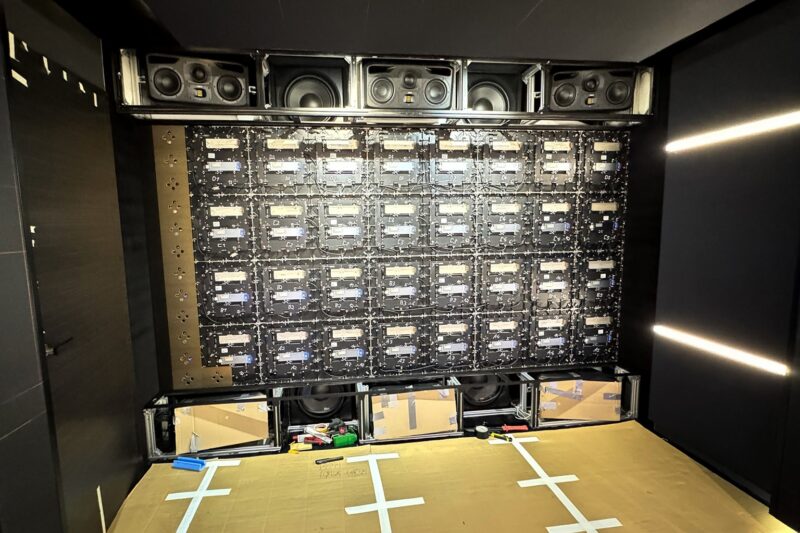
Why do you use studio monitors for your installations, such as in the Pitch Black cinema in Berlin, where S3H midfield monitors were installed?
“Because they sound fantastic and are a bit of a price-performance insider tip! The SPL performance is suitable for many applications, especially since we cross over the speakers at 80 Hz.
Additionally, ADAM Audio speakers offer a very balanced sound for a wide range of content – music, cinematic audio, and speech intelligibility.
Since the S3Hs are active monitors and are installed within wall systems, we do have to manage heat dissipation. However, the S Series from ADAM Audio offers an exceptionally good price-performance ratio, which more than compensates for this disadvantage.”
Thank you very much for your time and insights, and we wish you and the team at ARLED all the best!
Top Posts
You might like
-
Designing Immersive Sound Environments
Composer and sound designer Manolis Manousakis designed the immersive sound environment for the VR360 short film “On The Way To Colonus”. The film, created by Loukia Alavanou represents Greece in the Greek Pavilion at the Venice Biennale 2022. Four large, enclosed domes create an…
-
The key to good 3D Audio: Storytelling
Granted, there is nothing more hyped in the world of sound-engineering at the moment that of “immersive audio”, a term often synonymous with 3D Audio. It’s something which can be misleading, often ignoring the fact that mono-playback, through having its own engaging story, can also be immersive, and that experiencing…