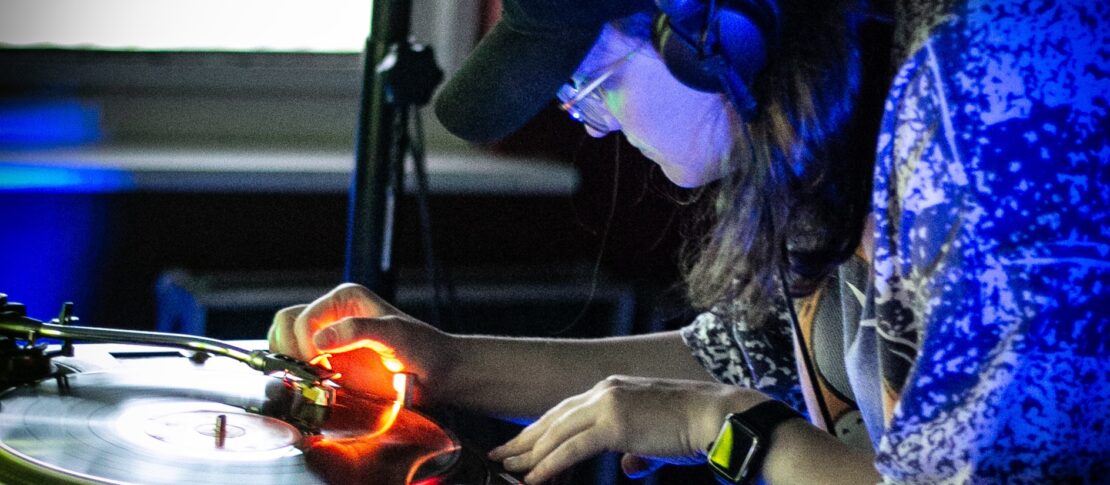
éist
“Listen”. A word that can stir the soul and rally our senses. Beyond auditory summons, it has the power to harness focus and open minds – engaging our channels of conscious processing. When heard, it can align incoming sensory streams and pave the way for cognitive imprint. Perhaps even more crucially, the basis for any dialogue, starts with listening.
Hailing from the southwest of Ireland, éist (“listen” in Irish) stands rooted in the musical and cultural fabric of its birthplace – the city of Cork – and seeks to showcase a platform as broad and diverse as the world to which it transmits. With a roster of shows spanning myriad influences and a wide variety of spoken and musical programming, the station stands for a spirit of human connection and offers an analogue atmosphere that feels reassuringly tangible in a resolutely digital world.
Background
Emerging in 2024 from a pop-up radio project (itself garnering notable success), the idea for a fully-fledged radio station coalesced from a set of fleeting performances into something more planted, which has since ignited a clear vision and shared passion among the team. Now into its second year of operation, the station has quickly established itself as a haven of carefully curated online broadcasting – one built on a platform of conscious core values.
ADAM Audio talks to the team and finds out more about what goes on behind the scenes. Here’s Úna on the station’s initial startup.
“éist came about after a radio project from Cork artists Elinor O’Donovan, Caoilian Sherlock and John Bosteels called ‘Radio Solstice’ debuted at the Cork Midsummer Festival in 2024.. ..it was a huge success and kind of revelatory for the community – everyone thought it would be great if something of a more permanent fixture could come about.”
“A public call was put out, a series of meetings took place, and slowly we built the station. It all happened really quickly, but there is a potent sense of dedication and energy, and it has become a labour of love for us.”
People and principles
As any resident will attest, Cork is a small city, albeit one with a vibrant, thriving community around music. The proximity of like-minded individuals contributing to the scene would seem to concentrate resolve, making the visible energy and dedication all the more compelling. There is a palpable and very affirming openness to welcoming people and influences into the city’s musical melange, as well as to the station itself.
Phil: “Come to Cork. We need more bands, DJ’s and promoters putting on their events in Cork. And we need building owners to invest in that economy and ensure that there are spaces available for these events and gatherings. The people are hungry for it. ”
Gilbert: “Cork is a welcoming, friendly, laid back city with a proud community radio history and we aim to continue that history with diverse and eclectic audio content.”
As if to bear out the fizzing sense of initiative, the organisers are adamant about avoiding blockers to creative input or having any prescriptive agenda within genre or programme selection. Anyone with an exciting idea, and resonant energy is welcome to submit a proposal. Between the relaxed manner and laissez-faire approach to artistic direction, you can feel the sense of an open door, both from an audience and contributor perspective.
Aidan: “I don’t think we have an overarching direction, other than to platform anyone who feels they’d like to share music, sound or chat. We do have some core principles that we ask hosts to be aligned with, after that, it’s whatever you fancy really.”
As a compliment to the warm, gregarious manner of the team, it is immediately obvious that beneath the station’s diverse spread of content, sits a foundation of key principles which underpin how the team organises itself and navigates the challenges of running a volunteer-led community radio project.
All those involved juggle the demands of separate personal and professional lives, so by voting on key issues and using a pragmatic, consensus-based approach to decision making, the team strives to imbue the operation with mutual trust, fairness and an equitable ethos. Here’s Úna again.
Úna: “We work strictly non-hierarchically, so no one has more authority than another, we’re a collective in that sense. Decision making is often decided by a majority vote, but we hold a lot of trust in each other as a unit to make decisions on the fly.
We have committees for various tasks, such as event organisation, programming, technical, communications, etc. Most people get stuck into a bit of everything. We work with as flat a structure as possible, and since we are all volunteers, help each other out as much as we are all able. We invite newer members in frequently to share skills.”
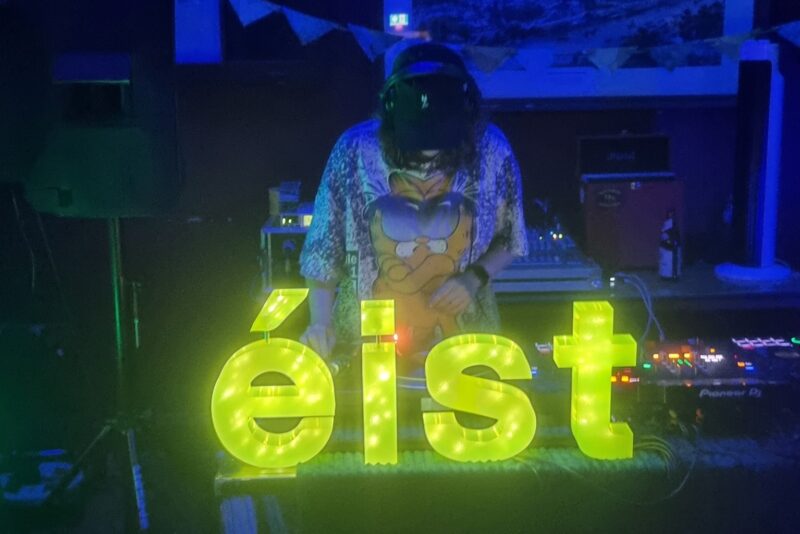
A labour of love
Within the egalitarian framework, the team also demonstrate flexibility and a symbiotic confidence in one another. Despite being a relatively small crew, this approach allows them to respond to operational challenges, especially if technical issues arise or things don’t go according to plan.
“We all have our own lives and goals, but éist is a way to mix some small amount of energy we all give willingly into something maybe bigger than the sum of those energies.”
Managing technical operations or navigating the inevitable hitches can be challenging, especially when everyone is balancing station life with personal commitments. At times, this approach can warrant a carefully orchestrated dance, one which demands creative problem solving and an agile approach if something falls over. This, plus a collectively-minded, ‘roll-the-sleeves-up’ mentality towards jumping in and helping out are essential for keeping things ticking over.
Úna: “Our main challenge I would say is work distribution and bandwidth – we are all volunteers with full time jobs, families, and social lives. It can be tricky at times when a show host needs technical assistance and someone from tech needs to jump on to troubleshoot in the middle of a work day. We’re really aware that it’s important to recruit new volunteers, to onboard properly and then delegate work, and that they can have a good experience with us, have fun and get something out of it. We’re working on it!”
Aidan: “When we started, we had huge holes in the schedule every day, now we have an overflowing library of over a year’s worth of amazing shows and shared music, chat, sound. Everyone has their own life going on, but there is room for a shared space with éist and that’s pretty special. What éist requires from the core team is hopefully pretty modest, but we definitely have to watch out for burn out.
Everyone has different interests, and everyone contributes a bit of time, a bit of creativity, and somehow it becomes something bigger. Like some of best aspects of the early internet, éist is a way to share common interests in a way that feels uniquely of the day..”
Community first
The éist approach to cultivating community stands refreshingly apart from the doom-scrolling paradigm of contemporary social media. The team are emphatically vocal in distinguishing their mission from the torrent of mainstream content being pumped via mass media technology platforms, as Aidan deftly illustrates:
“We’re not trying to compete with the volume or speed of social media. We’re trying to build a space where people actually tune in, dig the music and share banter in the chatbox rather than scroll past or consume silently. Even though we have an app and a website, it feels very lo-fi to me, I like that. You have to ask in the chat if you want to get a track ID, there’s no automated ticker tape of track titles flying by.”
“When every social feed looks the same and every platform pushes the same trends, éist feels in some ways like an unconscious push against the mainstream. We don’t have ads, everything is a bit chaotic.”
Locally global
While sidestepping the tide of commercialisation, there is also a clear aim to nurture reciprocal dialogue between the station and its audience. The value placed on interaction between both ends of the transmission chain underscores the communal aspect of what online radio can represent. Not just a one-way stream of broadcast content, but a self-sustaining feedback loop which sees presenters, producers and programmers connect directly with listeners who can actively respond in real-time. The station is building a community space as much as projecting a voice.
Aidan: “Traditional radio is a one-way broadcast. With éist, even though we’ve potentially got a worldwide reach on the internet, in practice we end up with a very local and intimate audience – most of the folks in the Discord chatbox are hosts themselves or core team. Broadcasts revolve around a small core of listeners I think – hosts support each other and get into the tunes that are being shared. I’m personally really in awe of some of the shows and music I hear – the passion for music really shines through and I’ve personally dug so much new music from listening to various other shows.”
It’s clear to see just how committed to the cause the éist team are, and the desire to embody both unity and community percolates throughout our discussion. Particularly inspiring are the accounts of how human gatherings and social inclusion both spring from and gravitate to the station – on this subject the ebullience is evident. Here’s Aidan:
Aidan: “Even though it’s primarily an online project, you get to meet people, you collaborate, and you end up building something together. That’s the bit you don’t get from social media or purely online communities – DIY radio is more fun, more organic.”
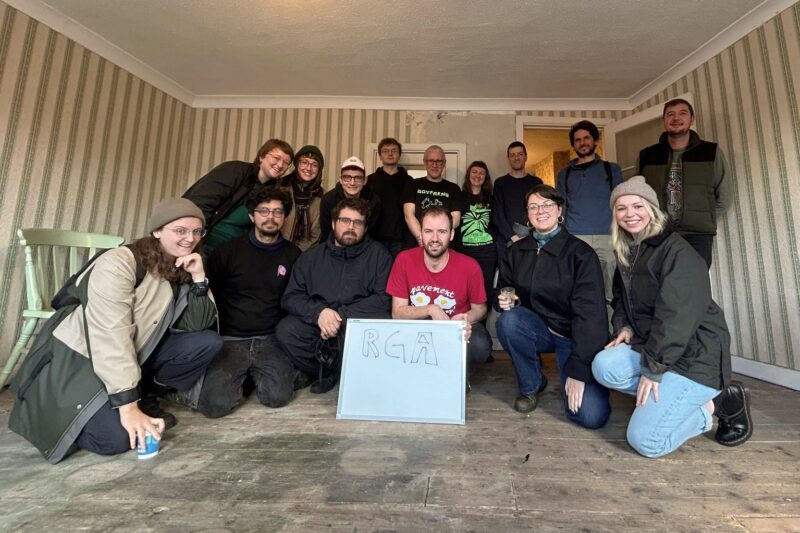
In both immediate and broader senses, the team demonstrate how this philosophy traces a common path throughout the station’s orbit.
Aidan: “I guess I see what we’re doing with éist as a reaction to the race-to-the-bottom of social media attention economy. In some ways, éist and other DIY internet radio stations (Hi DublinDigitalRadio!) like it are an attempt to reimagine the social network, built around common interests and shared beliefs. Even though it’s a fundamentally technology-enabled enterprise, one of the most rewarding aspects of the project is getting to meet new people and work on common goals and interests, [and] dig new or previously unheard music.”
This point seems fundamental and the juxtaposition of bringing old-school, ‘analogue’ human connection into the global, digital space is refreshing. When so many media outlets prioritise anodyne commercial gloss, the authentic, intimate feel of a boutique operation can make for a log-fire ambience and an inviting sense of proximity. Tuning in to éist feels less like being broadcasted at and more like being personally welcomed into the studio for a cup of tea, some homely chat and a deftly curated listening session with people who demonstrably care.
Phil: “I feel like radio is becoming less generic background music, and more of an intentional atmosphere for the listener. Rather than being one specialist show like John Peel in the 70s, there are now entire digital stations which cater to specialist music of all different kinds. I think the role of radio, the audiences it can reach, and the way it’s curated and listened to is in the midst of a huge shift.”
In parallel to the kaleidoscopic nuances of audience taste and shifting sands of technology, the team makes clear that there are also some technical factors which are central to the undertaking. At the heart of the auditory world, hewn in virtual space by the various contributors, there exists a very real, very tangible physical location as well an indispensable assemblage of hardware – both of which play a vital role.
“We’re using the same technology as the mainstream, but deploying it at a much more human scale. So we share stuff at a slower pace, more intentional, with everything done by real people.”
Aidan: “We’ve a pretty simple set up.. but it’s enough for us for now. We have some nice mics, and some hand-me-down CDJs + pioneer DJM mixer from our friends at Dublin Digital Radio, a turntable on loan from Éamon, and the other turntable from Jimmy. The T8Vs are lovely – just a nice way to get absorbed in the music when playing out from the studio. One of our goals in building out the studio is to make it a place where you can be comfortable and enjoy playing tunes or chatting or whatever you want to do up there. The T8Vs are big part of that effort.”
“The warm sound from the T8V sounds beautiful in our studio and provides perfect monitoring for radio broadcasting. The deep bass fills the space without ever getting muddy; the smooth midrange gives vocals and instruments a natural presence.”
As any craftsperson will agree, tools play a key role but are most effective when they vanish into the process, discretely enabling the human element at the core of the endeavour. If tools support the framework, then the space can be likened to the heart. Like any living organism, nothing is superfluous, but rather, every element plays a role. To this point, the team show a grounding appreciation of the station’s place of residence and the connections through which it came to be.
Aidan: “I think probably more important than the gear though is the actual space. We have an actual space, a room to call our own! That’s no mean feat in the current climate in Ireland, where we are living in the middle of a profound housing affordability crisis. I don’t think we’d be where we are now without the studio to be honest.”
Highlighting this critical issue of space for the arts, Aidan goes on to explain how this key element materialised.
“The éist studio is on the second floor of plugd records, a fulcrum for the music scene in Cork, éist wouldn’t have happened in the way it did without Jimmy and plugd records. Jim was on board from day one, and I don’t think we would have gotten nearly as far as we’ve come without that base upstairs in plugd to launch the station. The entrance to the studio is from behind the shop counter via a secret looking door and you have to duck your head when you enter to go up the stairs, feels a bit like entering a wardrobe to come out in Narnia haha.”
Phil and Gilbert volunteer some additional context:
Gilbert: “plugd records is the beating heart of Cork’s music community and Jim was kind enough to offer us a space on their upper floor. We feel very at home in this beautiful building on the Coal Quay of Cork City, where an open-air market was historically the beating heart of the city.”
Phil: “The studio is upstairs in plugd, a local record store that is precious to éist members. It seemed like a natural choice for a venue, to continue to build the local music community.”
Call and response
Chatting with éist, one can’t help but be reminded that, although the act of listening could be broadly framed as a passive undertaking, it is perhaps even truer that there always exists a di-polar interplay between two or more parties. A receiverless message is a kernel of potential scattered to the wind, while it is the receiving ground that acknowledges and allows that seed to flourish into a meaningful exchange. Sender, receiver, responder. Regardless of passive observance or active response, the gift of our attention to an offering from the heart represents a connection which transcends verbal exchange – not all communication is spoken. To hear is to listen, while to listen is also to hear and we as humans can communicate on any number of unseen planes.
Thanks to all the staff and contributors for generously sharing their time and insight.
Follow éist on Social Media:
Top Posts
You might like
-
The Evolution of High-End Home Cinema
For this piece, we had the opportunity to speak to Alexander Riemann of ARLED Cinema. They run a family-owned business in its second generation, and their team sets a new standard in home theater construction. ARLED’s installations feature unique components and combinations in AV technology, breaking new…
-
Inside Klevgrand: Pushing boundaries with innovative plugins
Plugins are an essential tool in today’s audio production and long gone are the days when these little helpers only tried to replicate the sound of their hardware counterparts. More than that, they have become a huge field of sound innovation in their own right, allowing creatives to manipulate their…