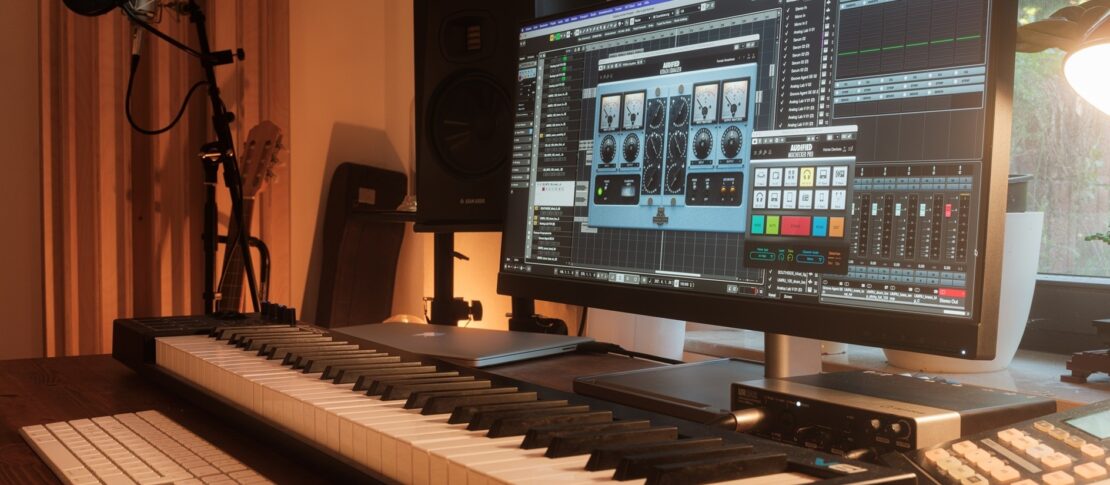
Built by Rebels: Plugins by Audified
Audified, originally founded as DSound in 1998, gained its first major success with the pioneering Stomp’n FX guitar pedal software, establishing early expertise in instrument emulation.
Over time, the company expanded its portfolio with products like the Amplion guitar rig – introduced ahead of many modern competitors – and collaborations with major audio brands. It later diversified into hardware and specialized audio systems, including professional recording solutions for courtrooms.
We have had the opportunity to speak to Audified’s COO, Tomas Bouda, about all things plugins. Enjoy!
Hi Tomas, and welcome to the ADAM Audio Blog! Please tell us a bit about yourself and how you ended up at Audified?
“I am a guitarist at heart, and if I were better at it, I’d probably do nothing else. But I always approached guitar and sound in general in a more scientific way and I was always tinkering, testing, and trying things out.
Then one day, while I was still a student, I guest-played as a lead guitarist on an album by a fairly well-known band that could afford a truly professional recording studio: Neve and SSL recording consoles, walls of outboard gear from all the legendary manufacturers, recording to analog tape … that whole sea of blinking lights and knobs instantly fascinated me, and I knew that this was exactly what I wanted to do in life.
To make a long story short, I then passed through many iconic studios and event venues as an audio technician in Europe and the US and gained a lot of experience as a sound engineer today already with 20 years of practice. Man, time flies.
I had known Audified for a long time, not only because it is the most important audio software manufacturer in the Czech Republic, but also because I used their plugins in my own work. Through my professional connection with the company’s owner, I followed the development and production of the company with interest, occasionally giving feedback, reviews, and so on. Eventually, Audified completely pulled me in, and we reached a kind of logical merger. So, here I am.”
Tomas Bouda continues to describe Audified less as a traditional company and more as a collective of musicians and creatives driven by passion. He emphasizes their informal, personality-driven culture and a boutique approach focused on meticulously crafting high-quality, detail-oriented tools that solve real workflow needs – prioritizing authenticity and precision over scale or speed.
Your company claim says, “Built by rebels.” How is this reflected in your company’s philosophy and the products you make?
“Rebellion in our sense is more about trying to ask whether the current direction in our field is actually the right one.
Not opposing it for the sake of opposition but always approaching the problem from all angles and looking for a way to solve it differently, more cleverly, more simply.
We are always looking for the most workable solution and want to bring that into our products as well. A great example is our flagship product MixChecker or the ToneKnob plugins.”
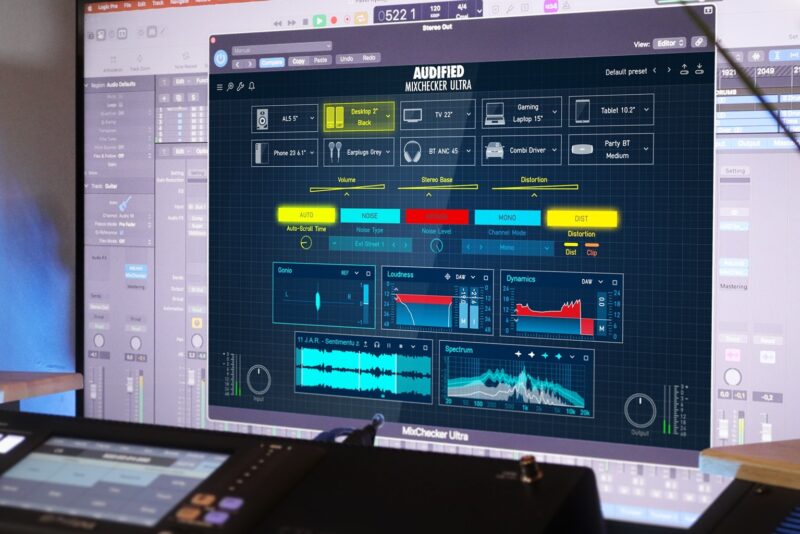
Speaking of MixChecker: Creating a mix that translates well outside of the studio is always the goal. Why is mix translation such a big problem, and how does Mix Checker support creatives with this?
“Getting a mix to translate to consumer playback devices – meaning the ones your fans and listeners will actually use – is absolutely crucial. Your mix may sound balanced, dynamic, and simply amazing in your polished, acoustically treated studio on speakers you know well. But most listeners do not have that luxury.
What will they be listening through? Usually earbuds, and in worse cases tiny smartphone speakers, laptop speakers, various home hi-fi systems, or a car. And that is exactly what our MixChecker solves.
In the ULTRA+ version, it offers playback and checking of your mix on nearly one hundred specific current devices. It also offers emulation of real background environments, for example ambient noise. It gives you calibration of your studio headphones, so they deliver a truly frequency-balanced response. We put together everything that is essential for a quality final mix and tried to present it in a user-friendly form.”
Tomas Bouda explains that Audified designs plugins for a broad range of users – from professionals seeking depth and precision to musicians and beginners who need simple, effective tools – with solutions that balance ease of use and high-end studio quality.
When using plugins that emulate real hardware, users should remember that analog gear was never “perfect” but defined by inherent limitations, which can help decision-making; in contrast, software’s limitless flexibility can lead to over-tweaking and loss of perspective. Audified therefore recreates not only the sonic character but also the original design constraints of analog devices, encouraging a more focused workflow, while still requiring attention to practical factors like signal levels, drive, distortion, and clipping—treating these plugins as precise emulations rather than purely digital effects.
Tomas, what do you think new producers should learn first, but often don’t?
“Listening. The ability to hear a problem is more important than blindly buying or using the tool that solves it.
Do not forget that you are still making music, an art form, something that should bring joy and stir emotions. Do not overfocus on rules, parameter values, numbers, and complicated FX chains. If it sounds good, it IS good!
And as a practical recommendation: invest in good listening, quality monitors, and at least some basic acoustic treatment for the room. It does not matter how expensive your computer is, or how many plugins you have on it. If you do not have good and balanced monitoring, achieving quality results will be very difficult.”
How do you prevent presets from becoming a crutch instead of a learning aid or something that helps as a quick starting point?
“A preset should never be the answer to a problem. It should be more of a question: What happens if I go in this direction?
It is something everyone has to go through. Presets unquestionably speed up the work, but over time, once more work and more mixes pass through your hands, you begin to bore yourself. You no longer want everything to sound the same, and you start experimenting. That is where the fun and the creative process really begin!
But that takes some experience, and a preset is a great tool for understanding how a given plugin works. In our case, we spend a huge amount of time on presets. For example, the presets for our bass plugin GK Amplification 3 PRO were made by truly experienced bass legends with a recognizable and brilliant sound, which we wanted to bring to our customers too.
So do not be afraid of presets. They were mostly created with the good intention of helping and saving time. Once you are ready, you will take your own path.”
Final question for you: The rise of AI marks most likely the next big step in terms of “democratizing” the creative process and making music. What is your take on this?
“I see AI more as a tool that removes routine work so there is more space for real decisions. I think that for us musicians, ‘studio rats’ and composers, the goal – and the biggest fun next to buying all that shiny equipment – is precisely the creative process itself. For us as developers, AI is a great helper that has partially removed that unpopular monkey work, but in the end, it is still always a human being who brings an idea to life and refines all the details.
Of course it will affect the music industry, and everything average will probably be replaced. You will no longer need people for elevator music. But for anything exceptional, there will still be a human being, and the human desire to create something lasting, something real, out of oneself — that, in my opinion, will always remain.”
Thank you very much for the interview, Tomas!
Learn more about Audified via the following links:
Top Posts
You might like
-
Inside Klevgrand: Pushing boundaries with innovative plugins
Plugins are an essential tool in today’s audio production and long gone are the days when these little helpers only tried to replicate the sound of their hardware counterparts. More than that, they have become a huge field of sound innovation in their own right, allowing creatives to manipulate their…
-
![Interview with Caspar Bock [Baby Audio]](https://www.adam-audio.com/blog/wp-content/uploads/resized/2022/12/adam-audio-blog-meet-caspar-bock-baby-audio-interview-thumbnail-300x200-c-default.jpg)
Interview with Caspar Bock [Baby Audio]
For this interview, we had the pleasure of talking to Caspar Bock of BABY Audio, a leader in the creation of creative plugins and tools for the modern studio. We touch on different topics such as how to develop a plugin, tips for starting out, and what…